Showing posts with label writing. Show all posts

Sunday, June 6, 2010

It's June Already?

Wow. Time flies when you're up to your elbows in a novel. I began my second novel, a science fiction story, at the beginning of April. By the end of April I had 60,000 words done. May went rather slower--about half as fast, in fact. By the end of May I finished the novel with 98,000 words. It's not done, of course. Not by any means. That was just the first draft.

I'm letting it sit for a couple of weeks. I'll spend the next two weeks* working on short stories. Then I'll print the novel out, and go over it, rearranging a few scenes, maybe tightening some and lengthening others, and cleaning up typos. That'll be the second draft.

Then I'll let my spouse--and my first reader--have a look at it. Assuming Spouse doesn't point out any major problems, I'll give it another quick polish and send it out into the cold, hard world in search of a home. That should take me until the end of June.

At which point, it will be time to start a third novel. My goal for 2010 is to get four novels written and circulating. The longer-term goal is to do the same every year for the next four years. That should result in 20 novels in the hands of publishers, which means a) I'll have that much more practice** at plotting and writing novels, and b) with practice and persistence, the odds should be pretty good that I'll have sold at least one. And to a major New York publisher, mind you. That doesn't count shorter novels I may or may not write and submit to smaller, possibly online epublishers.

In the mean time, I intend to start posting to this blog more regularly. Beginning on the 16th of this month, I'll be posting every Wednesday on the topic of How I Write. I'll be participating in a multi-blog effort, wherein all the bloggers will be posting on the same topic each week. It should be fun, and with any luck, educational for everyone involved. Stay tuned for that!

*I spent most of the last week suffering from a summer cold and doing very little writing.

**Assuming I'm starting from scratch (which isn't true), and assuming that, as it is often said, a writer has to produce a million words of crap before writing anything good, twenty 100,000 word novels is TWO MILLION words. Given that I've already sold a number of shorts, I like to think that I'm closer to breaking in than that. But the only way to find out is to keep writing and pitching, so that's the plan.

Sunday, April 18, 2010

Writing The Novel

I'm writing my second novel, as noted in a previous post. I'm averaging more words per day on this one than on the last one. It's a higher per-day average than I've done in anything so far. I ascribe part of it to trying harder to write, write, write every work day. But part of it is that I've gotten better at stifling my interal critic.

I set a kitchen timer for sixty minutes, start it, and begin writing. For the next hour, I write--as non-stop as humanly possible. I don't revise, I don't delete anything and start over. I just write the current scene, transcribing it as simply and explicitly as possible. I try to stay in a "flow" state, trusting my process (or my subconscious, if you will) to be creative and to produce something worthwhile. After all, I have decades of experience at reading and watching fiction. I've soaked up the rules, just the same way I soaked up the English language as a small child, learning by immersion.

Now, like a child learning to speak, practice (and correction) are necessary. But that's what writing every day, and trying to produce workable short stories and novels is: practice. Artists practice. Musicians practice. Actors practice. Athletes practice. World-class examples of each of those spheres practice more than anyone else; they don't practice to get good, then stop. They practice to stay at the top of their game even after they've reached the pinnacle of their professions.

Writing is no different. Every novel, every short story, every scene I write is practice. One of the great things about writing is that you can get paid to practice. Once you've reached minimal level of skill, enough to sell your work, you can continue to practice, and sell the results.

Ideally, I'm doing focused practice, working a specific skill or technique. Whether it's writing convincing dialogue, character voices, plotting, scene description, or some other facet of the writing, I try to focus on one skill or technique and consciously work to use/improve it. In my first novel, I focused on cliffhangers. I tried to end each hour-long writing segment, and each writing day (of several such hour-long writing intervals) on a cliffhanger of sorts. Not necessarily a classic cliffhanger--sometimes I simply stopped in mid-scene, so I could pick up again easily when I started the next writing interval. But I tried to end each scene with a real cliffhanger--a revelation, a threat, or both.

In this novel? Well, I'm not prepared to admit what I'm working on just now. Better not to reveal that until it's done. But there's practice going on.

Wednesday, March 10, 2010

The Ancient Art of Rejectomancy

I got my first novel rejection today.

A couple of weeks ago, I sent out five novel queries. The package consisted of a cover letter (including a one-paragraph blurb), the first chapter of my novel, and a three-page synopsis of the whole story. I sent the package to five different publishers.

How did I select the publishers? I perused Publisher's Marketplace. Among other things, they produce a daily list of novels sold to publishers, detailing the genre/field, the publishing imprint it was sold to, and the names of the author(s), agent(s), and editor(s) involved. If you're a paying member of the site, you can search the archives. Which I did, looking for the names of editors who had recently purchased novels in the same general genre as mine, then looked for more info on the editor, the imprint and the publishing house that owns the imprint.

I chose five and sent out a package to each of them. Four went out by snail mail, one via email. Unsurprisingly, the email submission was the first to get a reply. It was a rejection. The email said that I had a fascinating premise and that the novel showed promise, but that the writing failed to grab her attention and keep her reading even though she was interested in the plot.

So, when I practice the ancient art of Rejectomancy (scrutinizing rejection letters for clues), what do I learn? Well, first, it wasn't a form rejection. The editor liked the premise and seemed to find the plot interesting enough, which is good. But on the other hand, she didn't find my writing gripping enough to want to keep reading.

I'll try to improve my writing on the next novel. Try to punch it up, and grab the reader by the throat from word one. I'd do that anyhow, of course, but this feedback is something to keep in mind. Still, I'm not going to assume what I've written is no good. There are plenty of published, successful writers I don't read because I just don't care for their style for one reason or another. Nothing wrong with that. Tastes vary.

It may be that this editor just doesn't care for my style. Some other editor might feel differently. And this is, ultimately, only one person's opinion. So I'll consider her words, and keep them in mind as I continue working on my writing, but I'm not going to let one opinion stop me. After all, the next letter I get could just as easily be an acceptance, and I only need one of those.

Wednesday, February 24, 2010

Ssssssh! Novelist at Work!

In November of last year, I gritted my teeth and jumped into National Novel Writing Month with both feet. It was my first attempt at a novel, and I wrote it in eighteen days. All fifty thousand words of it, which is the goal of NaNoWriMo. It was an interesting, informative, sometimes frightening experience.

I worked without a net. I've never been able to plot out a story beforehand, though God knows I've tried .It just doesn't work for me. So I worked out a very general idea for the story, then on November 1st I sat down and started writing. Within a day or two I'd changed the names of my characters (and thereby their personalities) because what I'd started with wasn't working. Fortunately, that was a quick and easy search-and-replace task. I also changed the setting of the first scene, but only in the sense that I made a note to myself to change it upon revision and thereafter wrote as if I'd written it that way all along.*

Some days I thought I doing pretty well. Some days I thought I was writing crap. But I kept plugging along because, after all, it doesn't have to be good. It just has to be 50,000 words long. I placated my Ego (which wanted to spare me itself the pain of failure and rejection by giving up ahead of time) with that mantra. Some days were a struggle, but I did it. I wrote a 50,000 word novel and I finished it in eighteen days.

Then I promptly saved it and swore that it would never see the light of day again. I was convinced that it was awful. It was my first attempt at anything longer than a short story. How could it be anything but awful?

But my writing gurus, Dean Wesley Smith and Kristine Katherine Rusch, have repeatedly told me (and anyone else who'll listen) that a writer is not the best judge of his own work, and especially while he's writing it. They have over a hundred novels and hundreds of short stories published between them, and they still wrestle with that tiny voice that says "this is crap." It's such a common and predictable reaction, usually coming about a third of the way into the novel, that when one of them tells the other that the latest novel isn't working and they may have to start over, the other asks, "How far into it are you?" At which point, the other turns and goes back into his or her office to continue writing.

So I thought, I really ought to listen to them. Plus, my spouse (and trusted first reader) gently nudged me to reconsider. So I grudgingly pulled it up on the monitor and started reading it again in January. And it wasn't half bad. In fact, some of it I liked a lot. So I let my spouse read it, and got a rave review.

Okay, Spouse also had a few criticisms. I couldn't argue with them, either. So I decided, what the hell, I'll polish it up and send it out. Let some actual editors tell me if they thought it was worth buying or not.**

There was a problem, though. The minimum length for a publishable novel (with rare exceptions) is 70,000 words, but my novel was only 50,000 words long. So I had to revise and extend it, as Congressmen so often do their speeches in the Congressional Record. I've spent the last month or so doing just that.

It was slow, tedious work. In part, that was because my Ego gibbered and capered and jumped up and down, screeching and flinging poo, in a Herculean attempt to make me give up. Change is scary and difficult, even when it might be a good change. Writing and revising (and ultimately trying to sell) a novel meant changing my self-image. It meant thinking of myself as a novelist. It meant risking rejection (almost certainly repeated rejection, even if the novel eventually sells). My Ego hates that, so it tried hard to stop me, clinging to my ankle and crying piteously as I dragged myself (and my Ego) toward the finish line.

Some days, I confess, it succeeded. On other days, forcing myself to ignore that voice was difficult. On rare days, I successfully throttled it and managed to write several thousand words. But I'd set a goal of getting the novel finished and out the door by the end of February.

And today I finished the revisions. The novel weighs in at about 72,000 words. Shorter than I'd have liked, but as long as it's gonna get. This evening I scoured Publishers Marketplace for editors and publishers to whom I could send it, looking for editors who'd bought books in the same genre. I have a list of five I intend to start with.

Tomorrow...I'm taking the day off to celebrate finishing the novel. Friday, I'll write the cover letters and the synopsis, and get everything ready to mail. Saturday, the queries will go into the mail. I'm going to meet my deadline, and I'm very pleased by that. In March, I'm planning to work on some short stories, but in the not too distant future, I'll be starting another novel. My goal for this year is to have at least three novels written and circulating. More would be better, but three is the absolute minimum.

Look at me. I'm a novelist!


*A technique I learned from the Book In A Month workbook, and one I highly recommend.

**Robert Heinlein's fourth and fifth rules for writers:
4. You must mail your story to someone who will buy it.
5. You must keep it in the mail until someone buys it.

Friday, January 1, 2010

Happy 2010, everyone!

So it's the year 2010 A.D. We're living in the future. The far future, at that. Far from my childhood, at least. I distinctly remember lying bed one night, having watched a television special about the (then) unimaginably distant year 2000, and all the technological wonders it would hold. I remember calculating how old I'd be in the year 2000, and was slightly shocked--and more than a little horrified--to realize I'd be OLD. At least, from the perspective of a child who was only ten at the time.

The year 2000 is now a decade behind us, and I don't feel old. But then, I suspect I'll always feel like that child on the inside, no matter how old I look on the outside.

But, anyhow. 2009.

In 2009 I Got Serious about writing. Starting if February or March, I began working at writing stories on a regular basis and sending them out. At the end of April, I was handed my walking papers by my employers of fifteen years. After consulting with my spouse, much of which occurred during a weekend at the coast, we decided that we could afford to let me pursue the goal of being a professional writer.

To that end, in the year 2009, I completed 18 stories and sent them out. I have received 24 rejections, have 9 stories outstanding (no response yet), and sold 5, all to Cobblestone Press. I also wrote a 50,000 word novel for National Novel Writing Month. It was my first novel, but it won't be my last.

For 2010 my intent is to continue writing short stories--to write, finish, and submit one story per week, and to keep the stories in circulation until they sell, or until I exhaust all the markets, whichever comes first for a given story.

In addition, I've set the goal of writing three novels this year. And, again, with the intent to write, finish, and submit them to at least five publishers each, and when/if a given publisher rejects my query, to send the rejected novel to another publisher. And to continue doing so until either the novel sells, or I run out of publishers.

It's a numbers game, really. If you're a halfway decent writer, you can sell your work if you're persistent. The trick is to write a lot, finish what you write, and keep it out there, where editors can see it and decide to buy it. You have to be willing to face rejection--everyone gets rejected. Even the biggest of big name writers get rejected; it never stops. But if you're focused on writing the next project, and the next, and keeping the work in circulation is just part of the job, rejections don't sting so much.

It's like being a salesman. Or a world-class home run hitter. The salesmen who get a lot of yeses get a lot more nos. Babe Ruth struck out far more often than he hit homers, but if he wasn't swinging for the fences, he'd never have made all those home runs. So this year is the Year of the Numbers.

Lots of stories written.
Lots of stories finished.
Lots of stories submitted.
Lots of stories kept in circulation until they sell.

I hope "Lots of stories sold" will be at the end of that list on January 1, 2011. But that part isn't in my control. Everything on that list IS in my control. So that's the part I'll be focusing on.

Tuesday, October 27, 2009

Wow. Two weeks? NaNoWriMo jitters

Times flies when you're having fun. Or busy. Or busy having fun!

I've been writing. Trying to write a story a week, and succeeding more often than not. I'm also gearing up for National Novel Writing Month, or NaNoWriMo as it's often called. The object, for those of you who don't already know, is to write 50,000 words of a novel in 30 days--in November, specifically.

I've not attempted a novel before. But it's time. I've been writing short stories, and I've sold a couple, but novels are where it's at if you want to be a professional fiction writer, or so I'm told. It may be technically possible to make a real living writing short fiction, but it's going to be a tougher row to hoe than writing novels.

Short stories appear in one issue of a magazine, or an anthology, and then they're gone. Oh, it's possible that they can be resold--and they often will be, especially if you are (or become) a big name writer. But they're more ephemeral than novels. This may not be quite so true in th e-publishing world, where even shorts remain available for purchase for two or three years, maybe more. But in traditional publishing? There it is.

Novels, on the other hand, can remain in print for as long as they're selling. They can be sold to foreign markets. They can be resold and reprinted if they go out of print. (Again, this is easier if you're a name author, but if a publisher thinks they can make money from a previously published novel, they'll buy it.)

So. Novels. I'm still hammering out exactly what my novel will be, but I intend to write it this coming November. It's a little frightening to contemplate. A whole novel? Am I insane! But as has been pointed out by others, you can't eat an elephant all in one bite--but a bite at a time is quite doable. That's what I have to remember. I don't have to pour out a whole novel's worth of words (and characters and plots and settings and conflicts and dialogue and action) all in one go.

A mere 1,667 words each day for 30 days will generate 50,000 words at the end of the month. If I write only five days a week, taking weekends off, that's 2,380 words a day. Also eminently doable. I can do this. I will do this!

I'll just keep reciting my mantra: "I'm not nervous, I'm excited!"

Monday, October 5, 2009

Long day today...

I spent quite a long while today finishing another Iron Maiden story to send to Cobblestone Press. (They seem to like them, and I like writing them, so....) The main reason I spent so much time on it today, though, was to reach my goal of getting two stories completed and in the mail this week--and that was the second one.

The first story, "Reunion", is a short short. About 1900 words. Not a flashfic, but much shorter than most of the stuff I've written of late. I like it. My lovely and talented wife likes it.

Tomorrow the cycle starts all over again, with a goal of getting two stories written. However, November is now less than a month away. I'm going to participate in Nanowrimo this year--for the first time ever--so next month I'll be scaling back to one short story a week plus work on the novel.

I'll be guest blogging tomorrow (well, today now, actually...) at Rebecca Going's blog. I've been invited to guest blog elsewhere this week as well. More details later.

Wednesday, September 30, 2009

New Sale!

Woohoo! I watched Glee with my lovely and talented spouse tonight, then wandered over to my computer to check my email. I usually keep Gmail open in Firefox so I can see at a glance if I've gotten any mail, just in case sometime wants to buy one of my stories. Most days it doesn't happen.

Today?

Tonight I found a contract offer for "Bound by Convention" from Cobblestone Press. It's my second sale, and a sequel to my first. The editor wrote, and I quote, "You sure make 'super heroines' fun to read about. Enjoyed revisiting the Black Knight and his Iron Maiden." I'm glad to hear that, 'cause I like writing about them--one of the stories I'm working on this week is still another in that series. Needless to say, I'm very pleased.

Friday, September 25, 2009

My story is available now!

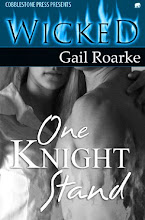
Hurrah! "Flying High" is now on sale at Cobblestone-press.com. It's my first fiction sale--but only the first of many, I hope! Click on the image to the right to go to the sale page.

Wednesday, September 16, 2009

Weekend Writing Workshop

My lovely and talented spouse and I spent four days at the coast this past weekend. We drove down on Friday morning and enjoyed lunch at Kyllo's, a great seafood restaurant there. We enjoyed the beach for a while, then checked into the inn where the workshop was to be held. The workshop was all day Saturday and Sunday, with extra bonus activities on Saturday evening. While I was workshopping, my lovely and talented spouse was busy enjoying the coast. We ate lots of good food all weekend and had a wonderful time. We even stayed over Sunday night to spend the next morning on the beach and eat lunch (Kyllo's again) before heading home.

So. The workshop. It was a two day introduction to life as a professional fiction writer, aka The Kris & Dean Show, taught by Dean Wesley Smith and Kristine Katherine Rusch. With nearly a couple hundred published novels and hundreds of short stories between them, to say nothing of experience as editors and publishers at one time or another, they had a lot to convey. There were nine students there, including myself.

First thing they brought up was Heinlein's Rules for Writers:
1. You must write.
2. You must finish what you write.
3. You must not rewrite except to editorial demand. (Harlan Ellison's addition: and only if you agree.)
4. You must mail your story to an editor who will pay you for it.
5. You must keep your story in the mail until it sells.

That's it. That's the whole secret of being a successful fiction writer. Simple in theory, but hard to do in practice. Fear will stop you in many, many ways--Heinlein's rules are largely designed (intentionally or otherwise) to circumvent those fears. If you follow the rules faithfully, you'll do what you need to do even if you fear rejection or failure. Afraid you're no good? Write anyhow. Afraid your story sucks? Finish it anyhow. Afraid it needs rewriting--an excellent way to avoid sending it out? Mail it. Afraid a rejection means you're a failure, an awful person? Keep sending it out. Just because one editor (or a hundred) rejected it, doesn't mean the next one will.

Kris Rusch mentioned that she'd recently just sold a story that's been circulating for TEN YEARS. Sometimes you let a story rest--when you've tried all the markets you can find--but when you discover a new potential market, out it goes again. Never say die.

They spent time busting some of the myths that have grown up around writing. Myths like "Good writing takes a long time.*" Lots of classics of modern literature were written very quickly. Many if not most successful fiction writers write quickly. Writing quickly helps keep your internal editor out of your way.

Myths like "You must rewrite to write well." Again, many successful writers do no substantive rewriting*. That is, they write a first draft, spellcheck it, have a trust first reader look it over, make any minor changes the reader suggests (assuming they agree) and then sent it out. Rewriting (actually changing character actions, plot points, and so forth) generally doesn't help-- it does, however, allow you to sand off the sharp edges and rawness that gives your work your distinctive voice.

Myths like "You need an agent to sell your story." No, you need an agent to negotiate a contract once you have an offer on the table. And to play attack dog for you when you need one to shake loose overdue checks, maybe. But that's it. You don't need an agent to submit your story to a publisher, no matter what the publishers tell you. And you never, ever, ever submit stories to an agent, or listen to any agent who wants to tell you how to improve your manuscript. Agents don't buy stories. Editors buy stories. See Heinlein's Rule #4 again. If the editor is paying for the privilege, HE gets to suggest changes. Nobody else.

Myths like "Nobody but a handful of big name writers can make any real money writing fiction." That's just not so. They went into a lot of detail about this one, explaining just how you can make a very good living writing fiction. I may go into the details in another post. But suffice it to say for now, that making a living as a writer of fiction is not only very possible, hundreds of thousands of people do it very comfortably. It only requires that you write a lot (so writing fast is good), and that you keep your work circulating.

They also had lots of practical advice on writing--physically writing, I mean. You can't spend hours every day sitting at a desk wiggling your fingers over a keyboard without serious physical issues if you don't a) make sure your desk, chair and computer are aligned properly, and b) get up and move around regularly, including lots of exercise. Writing is a sedentary job, but you have to take care of your body all the same.

They also gave us advice on other issues--tracking your manuscript submissions, making sure your stories and documents are safely and redundantly backed up in case the worst happens (Dean's house burned down many years ago and he lost a lot of his early manuscripts in that fire), and other practical issues.

I'd heard much of this before, of course. I read both of their blogs. But a good part of the material was also new to me. And it was all very inspiring. I came home with a renewed desire to write, write, write--and get my stories out in the mail (or e-mail, as the case may be).

My goal for at least the next few months is to write and mail two short stories (or one novelette or novella) a week. The more stories I can get in circulation, the better.

*A caveat: there is no one Right Way to write. Some writers DO write slowly, and some do rewrite extensively. If that works for you, go for it. But at least as often as not, and maybe more often than not, that's not the case.

Wednesday, September 2, 2009

Story Away! Plus, Publication Date Revealed!

Today was a good day in writing. I printed out the first draft of my most recent story and edited it in the waiting room while my spouse was being tormented treated by the dentist. When I got home I made the revisions to the story, hammered it into the proper form for an electronic submission, wrote the cover letter--and emailed it to Cobblestone Press.

I also did the final edits on Flying High and emailed them to my editor. (I have an editor--squee!)

And I got an email from the publisher's announcements list--Flying High will be published on September 25th! No wonder my editor told me we were on a tight schedule for the edits. (It wouldn't have been quite so tight, but the first time they emailed me the manuscript to edit, it went to the wrong email address. It didn't bounce, so apparently that address exists--it just isn't mine. So we were late getting started once the snafu was straightened out.

But it's done, and on track for publication on schedule. Yay!

So--tomorrow. That's when I decide which story to finish next. I have several in various stages, from a fuzzy idea in the back of my mind to those with several thousand words written, but no real structure yet. I'll pick the most promising and start on it tomorrow.

Monday, August 31, 2009

End of August Report

I'd hoped to get several stories in the mail this month. I managed one. A second is nearly done, but won't be ready until tomorrow at the earliest, so it won't qualify. I've done considerable writing, but not much has jelled this month. I hope to do better in September.

On the other hand, I'm now into the third round of edits for Flying High with Cobblestone Press. This is the final round, and then I assume I'll be slotted into the publication schedule and get a date certain for its release. I will, of course, let all and sundry know the moment I hear anything.

The editing process has been interesting. We've been sending drafts back and forth using Microsoft Word's Track Changes and commenting feature. Or they have, anyhow. I've been using either Word (on the laptop) or OpenOffice (on my primary PC). OpenOffice can handle Word's formatting, so it works--but either a) the translation is not 100 percent, or b) my unfamiliarity with the Track Changes and Style features of these programs is causing me trouble.

I've almost never used the Styles or Formatting features of Word or OpenOffice. We never made much use of it in my late, lamented day job, and I never used it at home. Any formatting I did I generally did by simply inserting italic or bold coding where needed, or justifying the text, or changing the font size on an ad hoc basis. Which was all I needed at work OR at home 99 percent of the time. Plus, mostly I formatted things to be printed, not electronically published.

That's a whole 'nother kettle of fish. I'll master it in the end, but it make take a couple of days of reading up on it and practicing. It'll do me good in the end. It'll add to my skills with Word, which won't hurt when job hunting, and since I fully intend to sell more stories to epublishers, knowing how to use these features to write and edit my manuscripts won't hurt in that arena either.

So. On to other things. My goal for September: to get at least three stories finished and submitted for publication. I'll also be attending the Kris and Dean Show in Lincoln City two weekends from now. I hope to learn a lot there. I will report on how it went.